Context Engineering Blog

Technical insights and engineering best practices

Latest Posts

A Developer's Guide to the Model Context Protocol

A Developer's Guide to the Model Context Protocol

20 min read
4190 words

The Model Context Protocol (MCP) is an open standard designed to solve the chaotic ‘M×N integration problem’ developers face when connecting AI models to their tools and data sources. Think of it as a universal power adapter for AI. Instead of building a custom connector for every single combination, MCP provides a standard, unified way for everything to talk to each other. This breaks a huge bottleneck, reducing infrastructure setup time by an estimated 90% and freeing developers to build truly context-aware applications.

Read more →
Context Engineering vs Prompt Engineering: From Manual Craft to Automated Science

Context Engineering vs Prompt Engineering: From Manual Craft to Automated Science

20 min read
4097 words

The core difference between context engineering and prompt engineering boils down to a single question: Are you manually crafting a one-off instruction, or are you architecting an automated system? Prompt engineering is the manual craft of writing specific instructions for a single AI task. Context engineering is the automated science of building systems that consistently feed an AI all the information it needs to handle complex jobs with production-grade accuracy.

Read more →
What Is Context Engineering? How Developers Feed AI the Right Information

What Is Context Engineering? How Developers Feed AI the Right Information

26 min read
5419 words

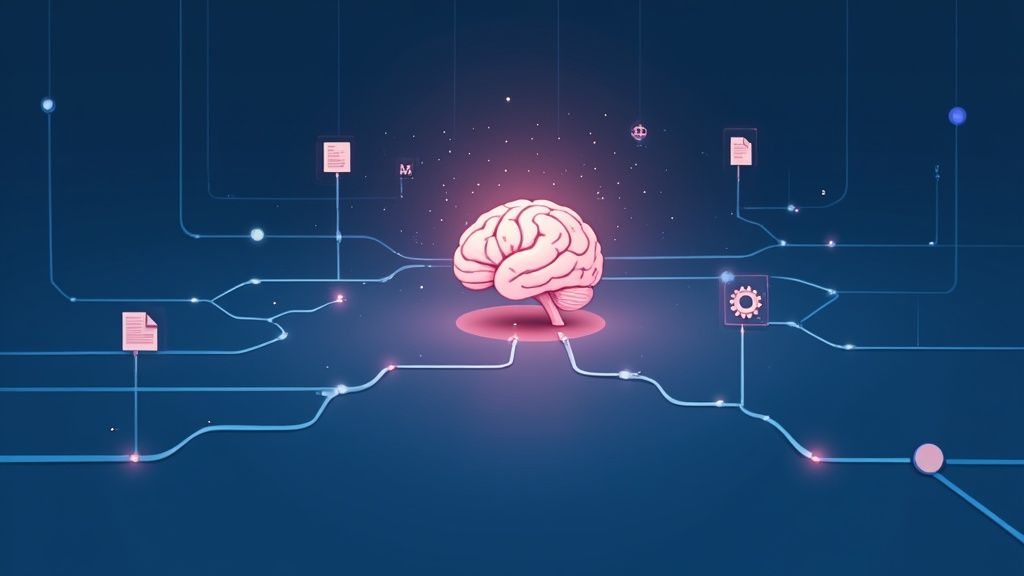
Context engineering is the systematic process of designing, building, and optimizing the information pipeline that provides a large language model (LLM) with the precise, relevant data it needs to perform a task accurately. It’s the critical discipline that transforms a powerful but generic AI into a specialized, reliable expert.

Think of an LLM as a world-class surgeon. A prompt is the command to “perform the surgery.” Context engineering is the entire support system: the patient’s medical history, real-time vital signs, MRI scans, and the specific surgical tools laid out in perfect order. Without this system, the surgeon’s skill is useless.

Read more →